
Lab Tests & Diagnostics
What clinical laboratory tests actually measure, how the numbers are produced, and how to read a report without panicking.
-
Tumour Markers: What They Can and Cannot Tell You
Tumour markers are good at watching a known cancer and poor at finding an unknown one, and the arithmetic behind that difference is worth understanding.

-
Coagulation Testing: PT, INR and aPTT in Plain Terms
The INR is not a biological measurement at all; it is a correction applied to make prothrombin times from different laboratories comparable.

-
Urinalysis: From Dipstick Colours to Microscopy
A urine test is three tests stacked on top of each other, and each layer answers a different question the one before it could not.

-
CRP and ESR: Two Very Different Views of Inflammation
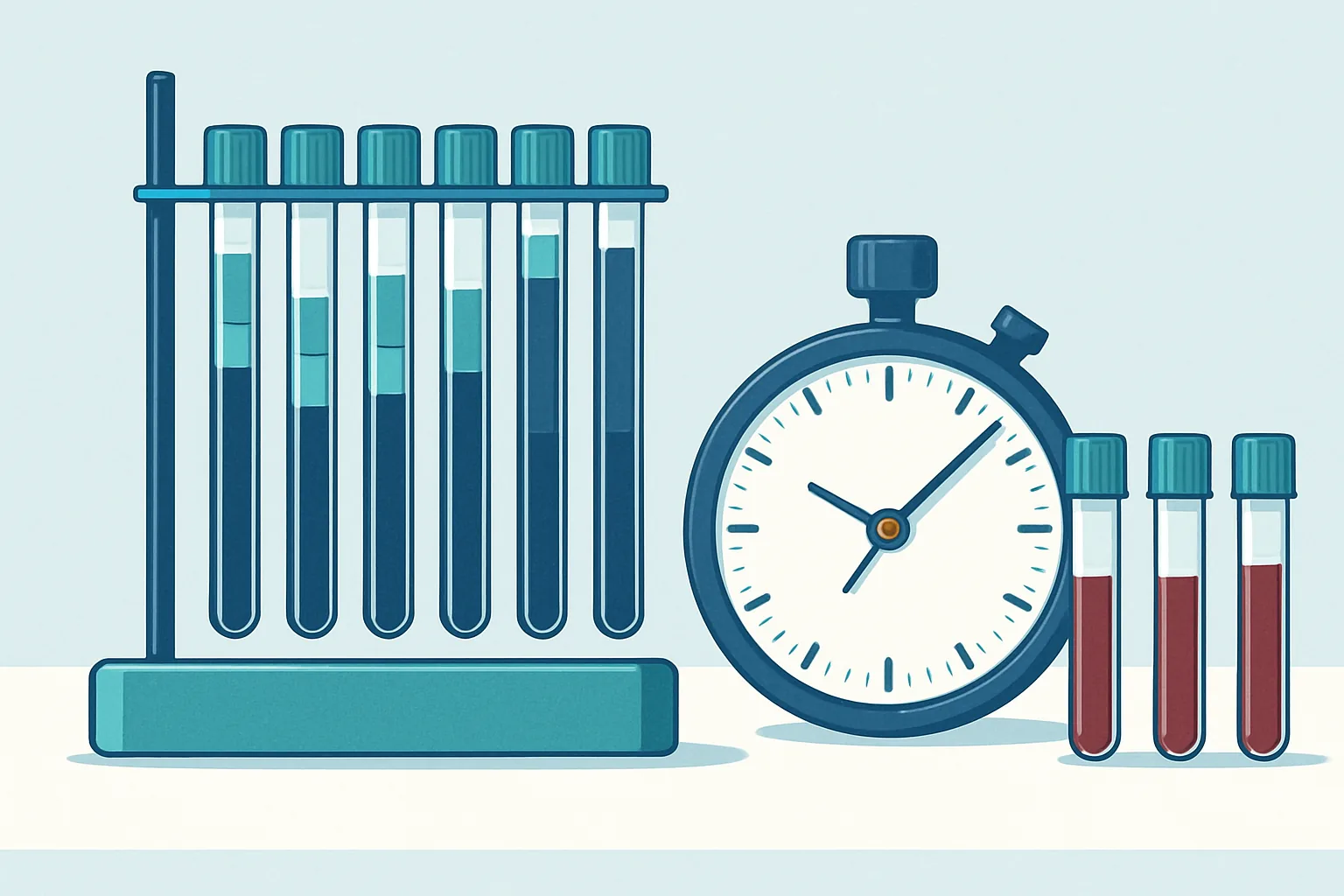
One test measures a protein directly and responds within hours; the other watches red cells fall down a tube and lags days behind. They are not…
-
Iron Studies: Ferritin, Transferrin and the Inflammation Trap
Ferritin measures iron stores and also rises with inflammation, which is why a normal ferritin can sit on top of genuine iron deficiency and hide it…

-
Vitamin D Testing and Why Labs Disagree on Normal
The same blood sample can return meaningfully different vitamin D results depending on which platform measures it, and the cut-off for deficiency is still argued over.

-
Kidney Function Testing: Creatinine, eGFR and Cystatin C
eGFR is not measured. It is calculated from creatinine, age and sex, which is why muscle mass and the choice of equation can move the number…
-
Liver Enzyme Panels Decoded: ALT, AST, ALP and GGT
Liver enzyme results are a pattern-recognition exercise. Which enzymes rise together, and in what proportion, matters far more than any single flagged value.

-
Inside a Thyroid Panel: TSH, Free T4 and Free T3
TSH is not a thyroid measurement. It is the pituitary’s opinion about thyroid output, and understanding that resolves most confusing thyroid panels.

-
HbA1c: What Three Months of Glucose Looks Like
HbA1c is described as a three-month average, but recent weeks count far more than older ones, and several common conditions distort it substantially.