
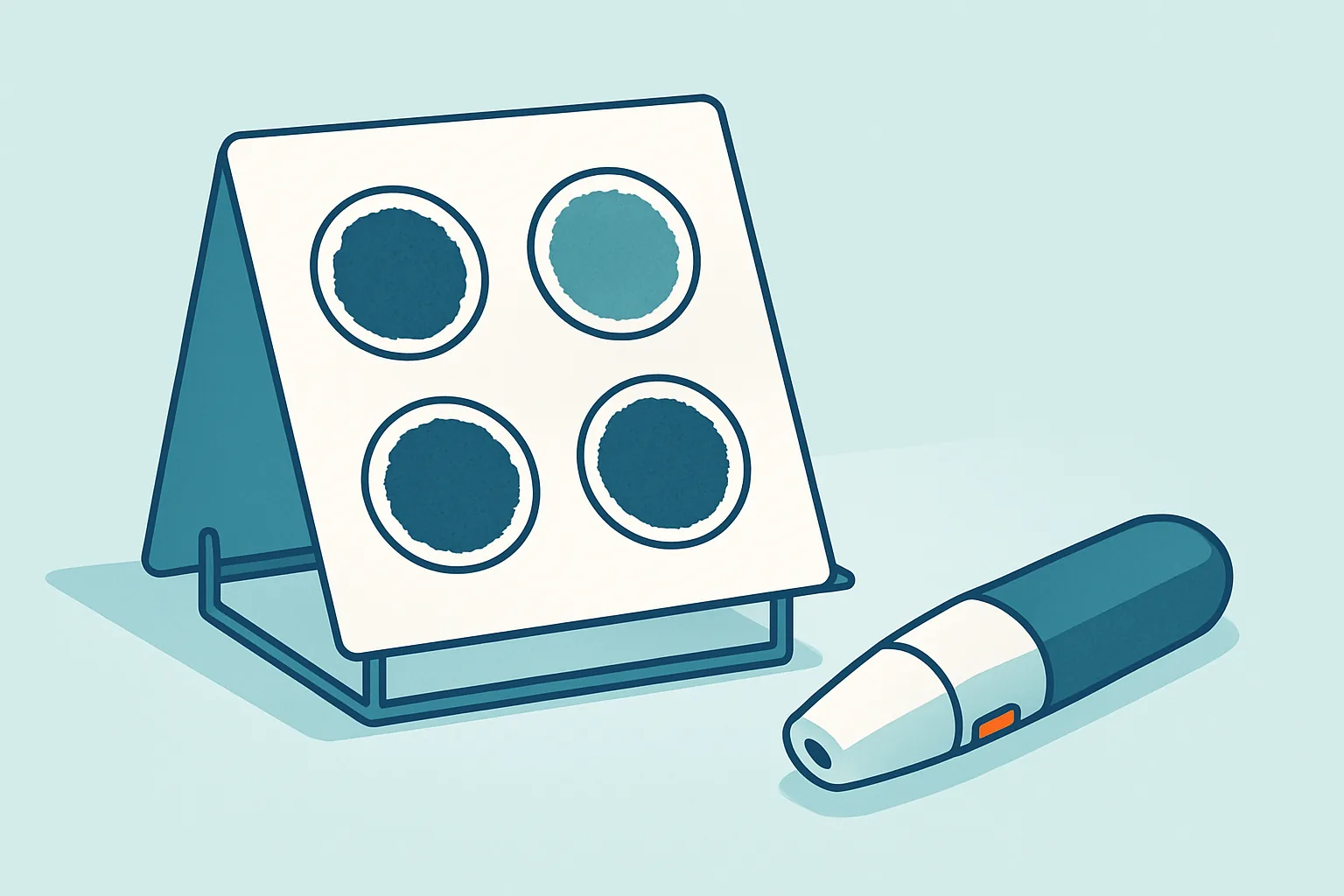
A few days after birth, someone takes a small blood sample from the baby’s heel and blots it onto a card printed with circles. The card goes away, and in the overwhelming majority of cases nothing further is heard. Occasionally a phone call comes, and the family spends a very difficult week before a second test comes back normal.
That sequence is not a failure of the programme. It is the programme working as intended. Newborn screening is deliberately built to over-refer, because the conditions it looks for are individually rare, severe, and treatable if caught before symptoms appear. Missing one has permanent consequences for a child. Calling a family back unnecessarily is distressing but reversible. Given that asymmetry, the thresholds are set to catch nearly everyone affected, and the cost is that a proportion of unaffected babies are called back too.
Understanding this changes how a recall feels. A positive newborn screen is not a diagnosis and is not even a strong prediction. It is a statement that a value fell outside a deliberately wide net, and that a definitive test is now warranted.
Key takeaways
- The heel prick is a screen, not a diagnostic test, and most positive results turn out to be unaffected babies.
- A dried blood spot is a stable, low-volume specimen that can be posted and stored, which is what makes population screening possible.
- Tandem mass spectrometry allows dozens of metabolic conditions to be screened from a single spot in one run.
- Thresholds are set to minimise missed cases, so the false positive rate is an accepted design consequence.
- Timing matters: sampling too early or too late changes what the markers mean.
What a Dried Blood Spot Card Holds
The card is filter paper of a tightly controlled specification, printed with circles that indicate where blood should go. That specification matters more than it looks. The paper is manufactured to a defined absorbency so that a drop of blood spreads to a predictable area, which means a small disc punched from the spot contains a reasonably consistent volume of blood. That consistency is what allows the laboratory to report concentrations at all.
Collection is from the heel because a newborn’s heel is well perfused and accessible, and because venous sampling in a newborn is difficult and more distressing. A single-use lancet makes a controlled puncture, the first drop is wiped away, and subsequent drops are allowed to fall onto the paper and soak through. The technique detail that matters most is that each circle should be filled by one application of a large drop from one side, rather than layered or filled from both sides, since layering concentrates cells and distorts every measured value.
Once dry, the sample is remarkably robust. Drying stabilises many analytes that would degrade rapidly in liquid blood, and the card can travel through ordinary post at ambient temperature without refrigeration. This is the single practical fact that makes universal newborn screening feasible: a hospital in any location can post a card to a central laboratory that has the instruments and the expertise, and a whole country can be covered by a handful of laboratories.
Each card also carries identifying information, the time and date of birth, the time of collection, gestational age, birth weight, feeding status and whether a transfusion has occurred. All of those are used in interpretation, and a card arriving with them incomplete may have to be repeated even if the blood itself is perfect.
Conditions Panels Typically Screen For

Panels differ between countries and sometimes between regions, but the categories are consistent, and the selection logic is explicit. A condition is generally added when it is serious, when there is a reliable test that works on a dried spot, when early treatment meaningfully changes the outcome, and when a clear pathway exists for confirming and managing it.
Metabolic disorders form the largest group. These are inherited enzyme deficiencies where a step in the breakdown or processing of amino acids, fatty acids or organic acids is blocked. The block causes a substrate to accumulate, sometimes to toxic levels, and a downstream product to be missing. Because both effects show up as altered concentrations of small molecules in blood, they are exactly what mass spectrometry detects well. Phenylketonuria is the historical example that started newborn screening and remains the clearest illustration: an affected child fed a normal diet accumulates phenylalanine and suffers irreversible neurological damage, while the same child on a controlled diet from the first weeks develops normally.
Endocrine conditions are a second group, most commonly congenital hypothyroidism and congenital adrenal hyperplasia. Both are detected by hormone measurement rather than by mass spectrometry, and both cause severe harm if untreated while responding very well to straightforward replacement therapy.
Haemoglobin disorders, particularly sickle cell disease, are detected by separating haemoglobin variants from the spot. Cystic fibrosis is screened by measuring immunoreactive trypsinogen, usually followed by genetic analysis on the same card when the level is raised. Severe combined immunodeficiency is screened by detecting a DNA marker of normal T cell development, and it is an example of the logic in its purest form, because affected infants appear entirely well at birth and can be treated effectively only before infections begin.
Tandem Mass Spectrometry in Newborn Screening
The technology that transformed newborn screening did so by changing the economics of adding conditions.
Before it, each condition needed its own assay, its own reagents and its own punch from the card. Adding a disorder meant adding cost proportionally, which set a hard practical limit on panel size. Tandem mass spectrometry replaced that with a single analysis that measures dozens of compounds at once, so the marginal cost of screening for one more metabolic condition became close to zero once the instrument was running.
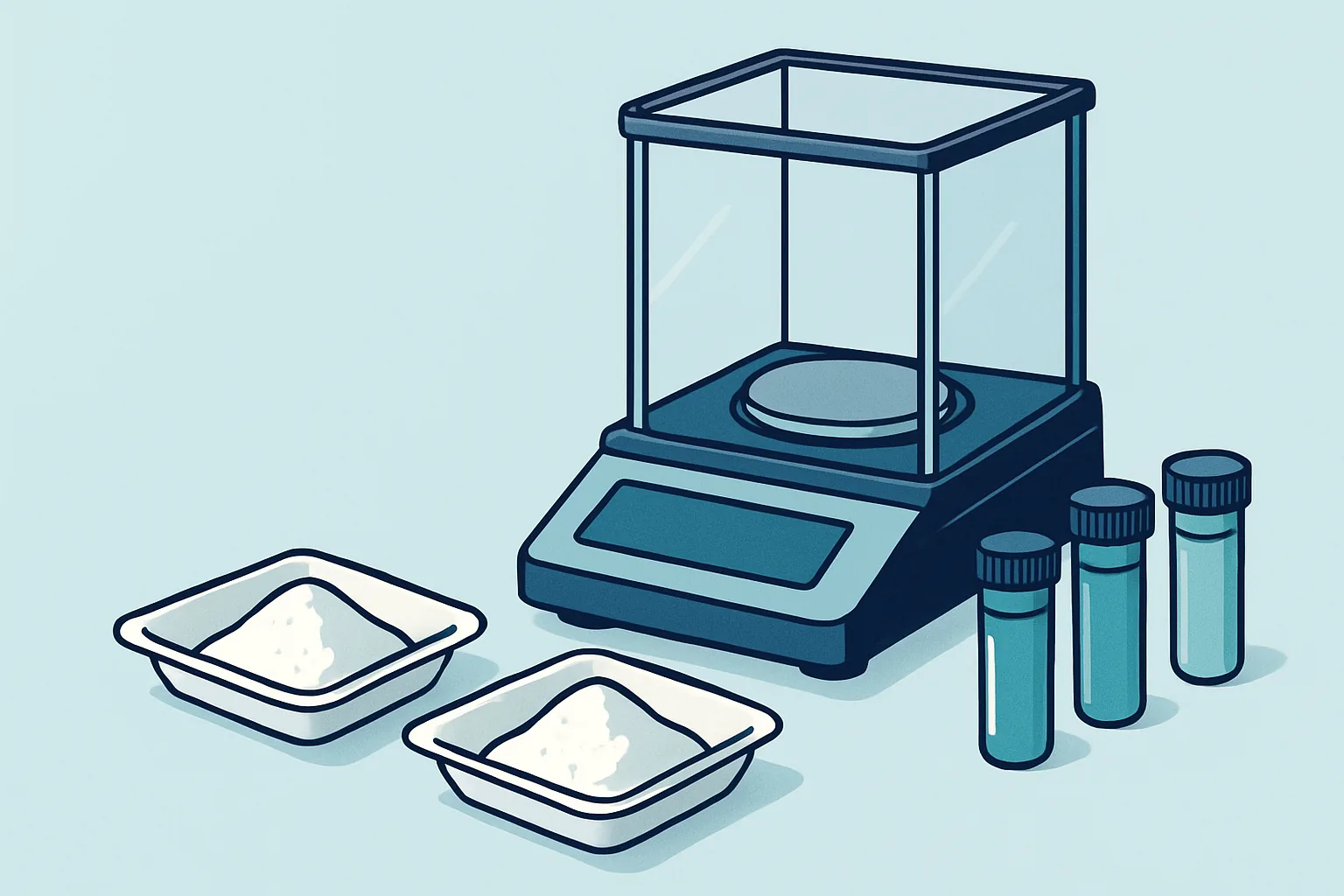
The method works on a small disc punched from the spot. The disc is extracted into a solvent containing a mixture of isotope-labelled internal standards, one for each class of compound being measured. The extract is introduced into the instrument, where molecules are ionised and passed into the first mass analyser, which selects ions of a chosen mass. Those ions are fragmented in a collision cell, and the second analyser measures the resulting fragments. Because each compound produces a characteristic fragmentation, the pairing of a precursor mass with a specific product ion identifies it with high confidence even in a complex mixture.
Amino acids and acylcarnitines are the two families that matter most here. Amino acid concentrations report on protein metabolism, so phenylalanine flags phenylketonuria and leucine flags maple syrup urine disease. Acylcarnitines report on fatty acid oxidation, because carnitine is the carrier that moves fatty acids into mitochondria and blocked pathways cause specific chain lengths to accumulate as their carnitine esters. The pattern of which chain lengths are raised points to which enzyme is deficient.
Crucially, interpretation is not just a set of thresholds. Ratios between related compounds are often far more informative than either value alone, because a ratio is less sensitive to overall sample quality and to a baby’s general condition, and because a blocked step raises one compound while its neighbour stays normal.
Why False Positives Are Accepted Here
Every screening test involves a threshold, and moving it trades two kinds of error against each other. A threshold set to catch every affected baby will inevitably include unaffected ones. A threshold set to include almost no unaffected babies will inevitably miss affected ones.
The choice depends entirely on what each error costs, and in newborn screening those costs are extraordinarily lopsided.
| Consideration | Missed case | Unnecessary recall |
|---|---|---|
| Consequence | Irreversible disability or death, often within weeks | Days of parental anxiety, one repeat sample |
| Reversibility | None | Complete once the second test returns |
| Who bears it | The affected child, permanently | The family, temporarily |
| Frequency at a given threshold | Very low by design | Higher, and accepted |
| Follow-up cost | Lifelong care | One confirmatory test |
Set against that, accepting a meaningful number of recalls to avoid missing cases is not a difficult judgement. The conditions screened are individually rare, which has an important statistical consequence: even a very accurate test applied to a population where a condition is rare produces more false positives than true ones. This is a property of screening rare things, not a defect of the assay, and it is why the positive predictive value of a newborn screen is low even when the test itself performs well.
Several things reduce unnecessary recalls without moving the main threshold. Second-tier testing runs an additional, more specific analysis on the same card before contacting the family, which resolves a substantial share of initial flags in the laboratory. Ratio-based interpretation, gestational age-adjusted cut-offs and birth-weight adjustment all narrow the net without loosening it. Programmes monitor their own recall rates closely, because a rate that drifts upward wastes resources and causes avoidable distress, while a rate that drifts down may mean cases are being missed.
Timing of Collection and Why It Matters
The window for collection is short and specific, usually a few days after birth, and both edges of it exist for physiological reasons.
Too early is a problem because many of the markers depend on the baby having fed. Metabolic conditions are disorders of processing a nutrient load, so a baby who has taken little or no milk may not yet have accumulated the substrate that the test detects. Phenylalanine, for example, rises after protein feeding, and a sample taken before feeding is established can be falsely reassuring. Some hormone levels also surge immediately after birth and settle over the following day or two, so sampling in the first hours produces values that are hard to interpret against normal ranges built for a later time point.
Too late is a problem for the opposite reason. The entire purpose is to intervene before damage occurs, and for some conditions the window between birth and irreversible harm is measured in days to weeks. A card that sits in a hospital drawer over a weekend or is posted slowly erodes the margin that makes the whole programme worthwhile. Transit time is monitored for exactly this reason.
Special situations need their own rules. Premature infants have immature enzyme systems and often receive parenteral nutrition rather than milk, both of which distort results, so many programmes repeat the screen at a later corrected age. A baby who has received a blood transfusion carries donor cells and donor haemoglobin, which invalidates haemoglobin and some enzyme-based tests until the transfused cells have cleared, requiring a repeat weeks later. Babies transferred between hospitals are the group most likely to be missed entirely, because responsibility for the card can fall between two teams.
The Recall and Confirmatory Testing Pathway
When a screen flags, what happens next is defined in advance and varies with the condition and with how far outside the range the value fell.
Some flags are resolved without contacting the family at all, through second-tier testing on the original card. Where that is not possible or not conclusive, the family is contacted. For most conditions this is a request for a repeat sample, either another blood spot or a venous sample, and the tone of that contact matters enormously. Families consistently report that the words used in the first phone call shaped their entire experience, and programmes that explain clearly that this is a screening result requiring confirmation, and that most such calls end normally, cause markedly less distress.
For a small number of conditions where deterioration can be rapid, the response is immediate referral to a specialist team rather than a repeat spot, sometimes on the same day, with treatment started before confirmation completes. Beginning treatment presumptively and stopping it if the diagnosis is not confirmed is the correct order when the alternative is a metabolic crisis.
Confirmation uses different methods from the screen, which is the point. Depending on the condition it may involve quantitative measurement in plasma or urine, direct enzyme activity assay, or genetic sequencing. These tests are slower, more expensive and far more specific, and they are the ones that produce a diagnosis.
A third outcome sits between the two and is increasingly common: the confirmatory testing finds something real but of uncertain significance, such as a mild biochemical variant or a genetic change of unclear effect. These children enter monitoring rather than treatment. It is an honest consequence of screening more sensitively than the underlying biology is understood, and it is one of the harder ongoing problems in the field.
Storage and Consent Questions About Cards
After testing, a portion of the card usually remains, and what happens to it is a genuine and unresolved policy question rather than a settled matter.
Residual spots have clear practical value. They allow a result to be rechecked if a question arises later, they support quality assurance and the validation of new assays, and they occasionally provide the only available sample from a child who has since died, which can answer a question that matters greatly to a family. Stored anonymised spots have also supported public health research on the prevalence of conditions and on population exposures.
They also carry a full genome. A dried blood spot is a DNA sample, and a stored collection of them is a population biobank assembled from newborns whose parents may not have understood that this was happening. Concerns about secondary use, law enforcement access and commercial research have led to litigation and to substantial policy change in several places.
Practice now varies widely. Retention periods range from months to indefinitely. Some programmes require explicit parental consent for any use beyond the screen itself, some allow parents to request destruction, and some default to retention with an opt-out that is not always well publicised. Consent models differ correspondingly, with some programmes treating screening itself as opt-out because of its public health importance while treating research storage as strictly opt-in.
For parents the practical position is straightforward. The local programme should be able to state how long the card is kept, what it may be used for, whether identifiers are attached, and how to request destruction. Those are reasonable questions with answers that exist in writing, and asking them does not affect the screening itself.
Frequently asked questions
Does a positive newborn screen mean my baby has the condition?
Usually not. Because the conditions are individually rare and thresholds are set deliberately wide, most babies with an out-of-range result turn out to be unaffected. The screen identifies babies who warrant a definitive test, and that definitive test is what establishes a diagnosis. The correct response to a recall is prompt follow-up rather than alarm, because the most likely outcome by a wide margin is a normal confirmatory result.
Can we decline the heel prick test?
In most places yes, since screening is generally offered rather than legally compelled, though the mechanism varies and some jurisdictions make declining deliberately difficult. What is worth weighing is that the conditions screened are treatable specifically because they are caught before symptoms appear, and that by the time an affected child becomes visibly unwell some of the damage is permanent. Anyone considering declining should ask the programme what is on the panel locally and what the consequences of a missed case would be.
Why does the panel differ between countries?
Because adding a condition is a policy judgement involving the severity of the disorder, the reliability of a spot-based test, whether early treatment genuinely changes outcomes, the local prevalence, and whether the health system can deliver the follow-up care. Different systems weigh those factors differently and can afford different things. A condition on one panel and not another usually reflects a disagreement about evidence or capacity rather than an oversight.
Does the heel prick hurt the baby?
It is a brief painful stimulus, and newborns feel it. Several measures reduce the response measurably, including breastfeeding or skin-to-skin contact during the procedure, a small amount of sucrose given orally beforehand, swaddling, and warming the heel first, which improves blood flow so the sample is collected faster with fewer punctures. Asking for these to be used is entirely reasonable and they are standard practice in many units.
What happens to the sample after testing is finished?
That depends on local policy, and it is worth asking directly. Remaining spots may be discarded after a defined period, retained for quality assurance and possible retesting, or stored long-term and potentially used in anonymised research. Because a dried spot is a DNA sample, several jurisdictions have tightened consent requirements substantially in recent years. Programmes should be able to tell parents the retention period, permitted uses and the process for requesting destruction.
The heel prick is one of the few genuinely preventive things medicine does routinely, and it works precisely because it accepts a cost that feels wrong in the moment. A recall call is frightening, and it will most often end with a normal result. That combination is not an error in the system; it is the price of a net wide enough to catch a child whose only symptom, on the day the sample was taken, was that they looked completely well.
This is education, not medical advice. Laboratory results only carry meaning alongside your symptoms, history and examination. Talk to a qualified clinician about your own results before changing anything about your care or supplements.