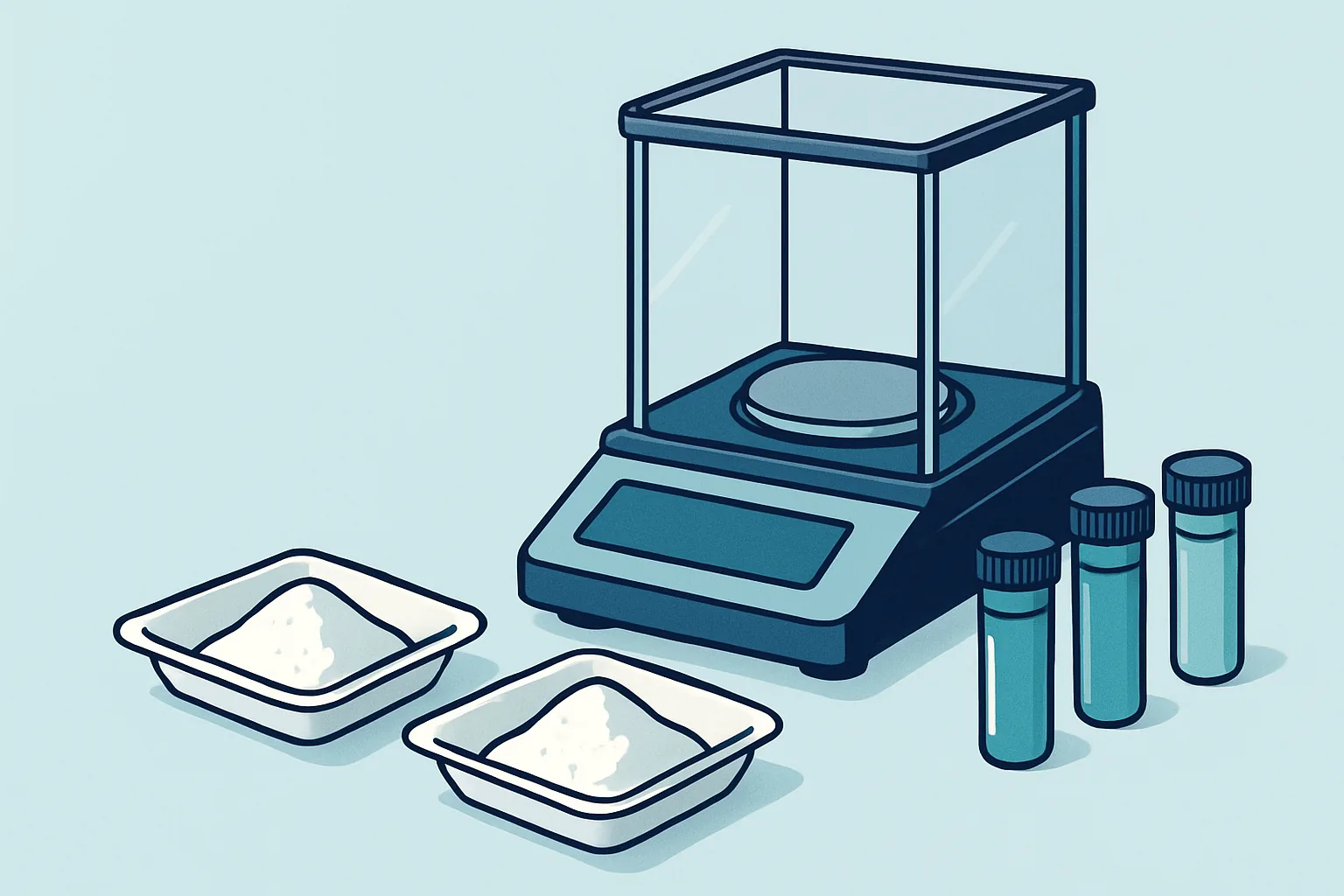


A home water test kit costs about as much as a takeaway meal and returns a page of coloured squares within minutes. An accredited laboratory panel costs considerably more, takes a fortnight, and requires you to fill specific bottles in a specific order at a specific time of day. The gap between them is not mainly about accuracy, though accuracy differs. It is about which questions each can answer at all.
Strip-based kits work by chemistry that produces a visible colour change, and that limits them to substances present at concentrations high enough to drive a visible reaction. That describes hardness, chlorine, pH, and nitrate reasonably well. It describes lead, which matters at concentrations thousands of times lower, very poorly. It says nothing at all about the several classes of contaminant that require instruments the size of a filing cabinet to detect.
None of this makes home kits useless. They are a sensible first step for questions about taste, scale, plumbing corrosion risk and the general character of a supply, and they can flag a problem worth investigating properly. The failure mode is treating a clean strip result as an all-clear across contaminants the strip was never capable of seeing.
What follows sorts the contaminants by the method needed to detect them, and by the sampling procedure that determines whether the result means anything.
Key takeaways
- Colorimetric strips detect substances present at relatively high concentrations; most health-based limits sit far below that.
- Lead results depend more on how the sample was taken than on how it was analysed.
- Bacterial testing requires a sterile bottle, a preservative where chlorine is present, and rapid delivery to a laboratory.
- Several important contaminant classes are only detectable by instrumental methods in an accredited laboratory.
- Which test you need follows from your plumbing, your water source and your local supply, not from a general worry.
What a Home Water Kit Can Detect
Consumer kits combine three formats. Dip strips carry reagent pads that change colour in the presence of a target. Drop-count titration kits, common for hardness, add reagent until a colour endpoint is reached and count the drops. Some kits add a small meter for a physical property rather than a chemical one.
The parameters they handle competently share a feature: the concentrations of interest are high enough for a visible chemical reaction. Total hardness, measured as dissolved calcium and magnesium, sits in the tens or hundreds of milligrams per litre. Free and total chlorine in a treated supply are present at levels chosen to be measurable. pH is read from an indicator dye. Nitrate and nitrite are reduced and coupled to form a coloured dye, and the drinking water limits are within reach of that chemistry. Iron, copper and total alkalinity behave similarly.
Meters address different properties again. Total dissolved solids meters actually measure electrical conductivity and convert it using an assumed factor, which is a genuinely useful indicator of overall mineral content and completely uninformative about which minerals. A low reading is not a safety statement, since the substances of greatest health concern are present at concentrations far too low to move conductivity at all.
The honest summary is that a home kit characterises the general chemistry of a supply. It answers why a kettle furs up, whether water is aggressive enough to corrode pipes, whether chlorine explains the taste, and whether nitrate is elevated in a well. It does not answer whether the water is safe, because safety is determined by substances the kit cannot see.
Colorimetric Strips and Their Precision
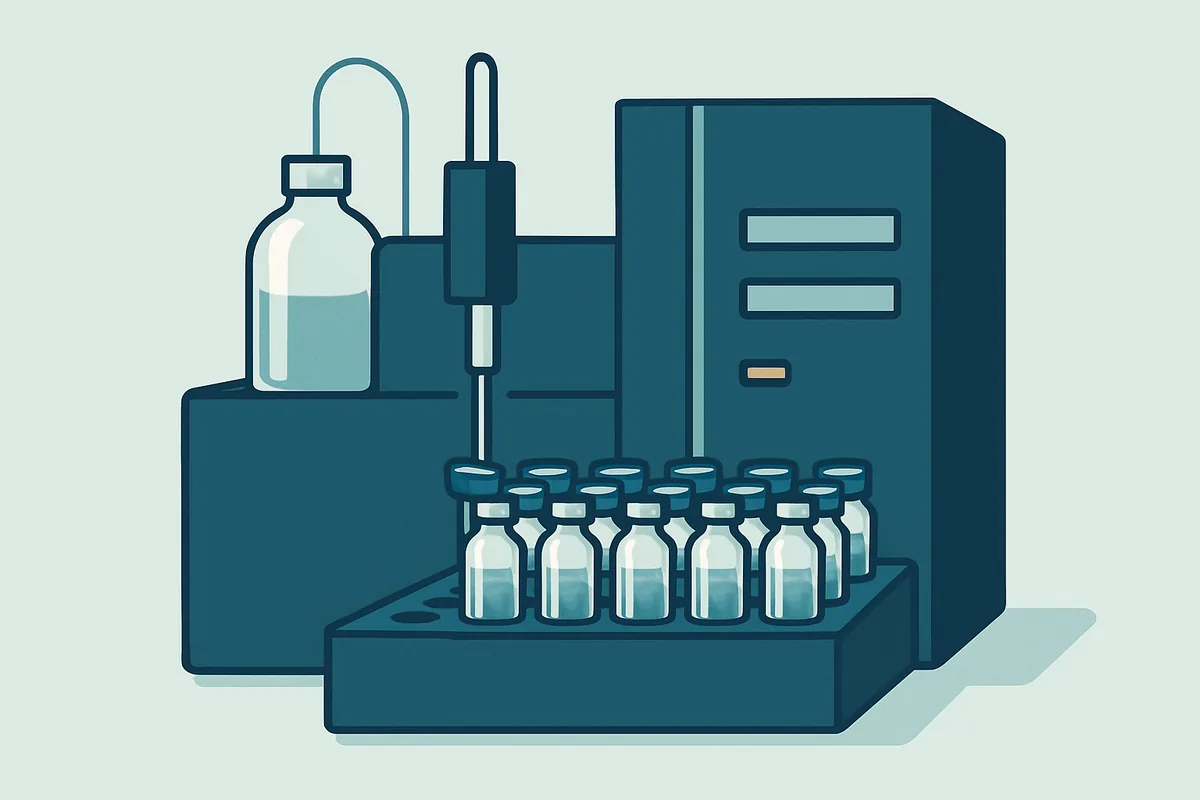
Understanding why strips behave as they do makes their results easier to use. A reagent pad holds chemistry that reacts with the target to form a coloured product whose intensity scales with concentration, and the user compares the pad against printed blocks representing concentration steps.
Three constraints follow directly. The first is resolution. A chart with five colour blocks divides the whole range into five bins, so the result is a broad band rather than a number, and the middle of that band may be considerably wider than the difference between acceptable and unacceptable. The second is the reading itself: colour judgement varies between people, is affected by lighting and by the background surface, and is impossible for anyone with reduced colour discrimination. The third is timing. The reaction continues after the specified read time, so a pad read late gives a higher answer, and one read early gives a lower one.
Interference adds a fourth. Reagent chemistry is selective rather than specific, and other substances in the sample can react or can suppress the reaction. Highly coloured or turbid water shifts the apparent result. Water at an unusual pH can put a reagent outside its working range entirely. Strips also deteriorate with humidity, which is why the desiccant in the tube matters and why a tube left open in a bathroom gives unreliable results long before its printed expiry.
| Parameter | Home kit capability | Laboratory method | Practical verdict |
|---|---|---|---|
| Hardness | Good, adequate resolution | Titration or elemental analysis | Home kit sufficient |
| Free chlorine | Good if read promptly | Colorimetry with calibrated instrument | Home kit sufficient |
| pH | Approximate, meter better than strip | Calibrated electrode | Home kit usually sufficient |
| Nitrate | Reasonable near the limit | Ion chromatography | Home kit screens, laboratory confirms |
| Lead | Poor, low sensitivity and interference | Mass spectrometry | Laboratory required |
| Coliform bacteria | Presence or absence only, if incubated | Culture or enzyme substrate | Laboratory strongly preferred |
| Pesticides, solvents, PFAS | Not detectable | Chromatography with mass detection | Laboratory only |
Lead Testing and First-Draw Sampling
Lead deserves separate treatment because it is the contaminant people most often buy a kit to check, and it is the one where the kit is least able to help.
The reason is a mismatch of scale. Health-based limits for lead in drinking water are set in the low micrograms per litre, thousands of times below the concentrations that colorimetric chemistry can resolve. Consumer lead strips are generally designed to indicate presence somewhere near or above a threshold, and a negative result cannot distinguish water with no lead from water carrying a concentration that would concern a regulator. Interference from other metals compounds the problem.
Sampling matters even more than analysis. Lead rarely originates in the source water or the treatment works. It leaches from lead service pipes, lead solder in copper plumbing, and brass fittings, which means the concentration depends on how long the water has been standing in contact with those materials. Water that has sat in a lead pipe overnight can carry many times the lead of water drawn after the tap has run.
This is why protocols specify a first-draw sample: collected first thing in the morning, from a tap that has not been used for several hours, without running the tap first, and without removing or cleaning the aerator beforehand. Each of those instructions exists to preserve the worst-case condition the household actually drinks. A helpful person who flushes the line before filling the bottle has produced a clean result that describes water nobody drinks at that hour.
Sequential sampling, taking several bottles in succession, localises the source, because the first volume reflects the tap and immediate fittings while later volumes reflect the service line. Where lead is a plausible concern, the correct route is a laboratory that reports in micrograms per litre with a stated detection limit, using the sampling protocol supplied with the bottles.
Bacteria Testing and Sample Handling
Microbiological testing follows different rules again, because the target is alive and its population changes between collection and analysis.
The standard indicators are total coliforms and Escherichia coli. Neither is chosen because it is the most dangerous organism present. Coliforms are common in the environment and their presence suggests a route by which surface material can enter the supply, while E. coli specifically indicates faecal contamination and therefore the possible presence of pathogens. They are indicators of a breach rather than a full inventory.
The handling requirements are strict and each has a mechanism behind it. The bottle must be sterile, since a contaminated container produces a positive result about the container. Where the supply is chlorinated, the bottle contains sodium thiosulfate to neutralise residual chlorine at the moment of collection; without it, chlorine continues killing organisms in transit and the laboratory measures the journey rather than the tap. The sample must be kept cool and delivered within a short holding time, commonly within a day, because organisms multiply or die off and both directions produce a wrong answer. Collection technique matters too: remove attachments from the tap, run the water to clear the standing volume, avoid touching the bottle rim, and fill to the mark, leaving the small headspace the laboratory expects.
Home bacteria kits do exist, typically using a broth that changes colour when coliforms grow, and they give presence or absence after incubation. Used correctly they can flag gross contamination. They do not quantify, they do not distinguish organisms with the specificity of laboratory methods, and they rely on an incubation temperature a household kitchen holds poorly. For a private well, particularly after flooding, repair work or any change in taste or clarity, laboratory testing is the appropriate response.
Contaminants Requiring Laboratory Analysis
Several categories are entirely outside the reach of consumer chemistry, and they are worth naming because they include most of the substances that prompt concern.
Trace metals beyond lead, including arsenic, cadmium, chromium and mercury, are measured by digesting the sample and detecting elements by mass or by their emission spectrum. These techniques quantify at parts per billion and below. Arsenic in particular is a serious issue in some groundwater regions, is entirely tasteless and colourless, and has no meaningful consumer test.
Volatile organic compounds, including solvents and fuel components, require gas chromatography with mass detection. Their sampling is unusually demanding: the bottle must be filled completely with no air bubble, because these compounds partition into any headspace and are lost. A bubble in the vial invalidates the sample.
Disinfection by-products form when chlorine reacts with natural organic matter in the source water. They are regulated because of long-term exposure concerns and are measured chromatographically. Pesticides and herbicides span many chemical classes and generally need targeted methods for the compounds plausibly present in a given catchment.
Per- and polyfluoroalkyl substances have become a common reason for testing. They are persistent, mobile in groundwater, and regulated at extremely low concentrations, which places them firmly in specialist territory. Their analysis requires particular care over contamination from sampling equipment and from ordinary consumer materials, since these compounds are used in many water-repellent products. Laboratories offering this work supply specific instructions about what samplers may wear and touch.
Radiological parameters, including radon and uranium in some geologies, complete the list of things a strip will never reveal.
Certified Laboratories and Accredited Methods
Choosing a laboratory is mostly a question of accreditation, and the concept is worth understanding rather than treating as a badge.
An accredited laboratory has been assessed by an independent body against a recognised standard for testing laboratories, covering staff competence, equipment calibration, method validation, sample handling, and participation in proficiency schemes where unknown samples are analysed and compared against other laboratories. Accreditation is granted for specific methods on specific matrices, so the relevant question is not whether a laboratory is accredited in general but whether it is accredited for the analyte you care about in drinking water. In the United States, laboratories analysing drinking water for regulatory purposes are certified through state programmes under a national framework; in the United Kingdom and much of Europe, accreditation to the international testing standard fills the same role.
The practical consequence is that an accredited laboratory sends bottles that are correct for each test, with preservatives already added and instructions that specify order, timing and technique. That package is a substantial part of what is being paid for, because a perfectly executed analysis of a badly collected sample is worthless.
Reading the report repays attention to three things. The detection limit states the lowest concentration the method can reliably report, so “not detected” means only “not above this limit”. The comparison limit, and whether it is health-based or an aesthetic guideline, determines what the result implies. The method reference shows whether a recognised standard method was used.
Deciding Which Test Your Situation Needs
The right test follows from the situation rather than from a general anxiety, and a handful of facts about your circumstances narrows it quickly.
The first is the source. A private well or spring has no treatment, no monitoring and no one else checking, and the household is the water supplier. Annual testing for bacteria and nitrate is the usual baseline recommendation, with a broader panel less often and additional testing for anything the local geology or land use makes likely, such as arsenic or agricultural chemicals. A public supply is monitored continuously, and utilities publish annual quality reports covering the water leaving the works and the distribution network.
The second is your plumbing, because a public supply’s report describes water before it reaches your building. Housing built before lead was eliminated from pipes and solder, and buildings with a lead service line, carry a risk the utility’s monitoring may not capture at your tap. This is the strongest case for a first-draw lead test, particularly where a young child or a pregnant woman is in the household.
The third is what changed. New taste, odour or colour, discoloured water after works in the street, flooding, a nearby spill, or plumbing work that disturbed old pipework all justify testing, and the answer to what changed usually points at what to test for.
Two situations warrant going straight to a laboratory. Any household on a private well with an infant, since nitrate carries specific risks in the first months of life, and any suspicion of a specific industrial or agricultural contaminant, since these need targeted methods chosen in advance.
Frequently asked questions
Can a home kit tell me whether my water is safe to drink?
No, and this is the most important limitation to be clear about. Home kits measure a handful of parameters that happen to be present at concentrations high enough for colour chemistry, mostly related to taste, hardness, corrosion and disinfection. The substances that determine health safety, including most trace metals, solvents, pesticides and per- and polyfluoroalkyl substances, are regulated at concentrations far below anything a strip can reach, and several have no consumer test at all. A clean set of strip results tells you the water is unremarkable in those specific respects and nothing more.
How often should a private well be tested?
Common guidance is bacteriological and nitrate testing annually, with a broader chemical panel at longer intervals, and additional testing whenever something changes. Changes that should trigger a test include any alteration in taste, smell or appearance, flooding or heavy runoff reaching the wellhead, repairs to the well or pump, a new septic system or agricultural activity nearby, or unexplained gastrointestinal illness in the household. Because a well has no treatment barrier and no external monitoring, the testing schedule is the only surveillance the supply gets.
Does a water filter remove the need for testing?
It shifts the question rather than removing it. Filters are certified for specific contaminant classes, and no single technology covers everything: activated carbon addresses chlorine, taste and many organic compounds, while dissolved metals and nitrate generally require reverse osmosis or a specific ion exchange medium. Choosing a filter sensibly requires knowing what is in the water first, which means testing before purchase. Testing afterwards also confirms that the unit is performing, since filters lose capacity and a saturated carbon block can release accumulated material.
Why does the laboratory insist the bottle is filled to the top?
For volatile compounds, any air space allows the target to partition out of the water and into the headspace, where it is lost when the vial is opened, producing an artificially low result. Other tests have the opposite requirement and specify headspace so the sample can be mixed, and microbiological bottles leave a gap for the same reason. The instructions are method-specific rather than arbitrary, which is one reason laboratories supply their own bottles rather than accepting whatever container arrives.
Is bottled water tested more rigorously than tap water?
Not necessarily, and the frameworks differ in ways that surprise people. Public drinking water supplies are typically subject to frequent mandatory monitoring with published results, whereas bottled water is regulated as a food product, with testing requirements set accordingly and results not generally published in the same way. Bottled water is not inherently safer, and mineral content varies widely between brands. Where a genuine contaminant is confirmed in a supply, bottled water is a reasonable short-term measure while a permanent solution is arranged.
The practical approach is to let the question dictate the method rather than the other way around. If the question is why the kettle scales or why the water tastes of chlorine, a home kit answers it for a few pounds. If the question involves lead, bacteria, arsenic, solvents or anything regulated at parts per billion, the analysis needs an instrument and the sample needs a protocol, and the protocol matters at least as much as the instrument. A strip that comes back clean has answered the question it was designed for, and it is worth being precise about how narrow that question was.
This is education, not medical advice. Laboratory results only carry meaning alongside your symptoms, history and examination. Talk to a qualified clinician about your own results before changing anything about your care or supplements.