

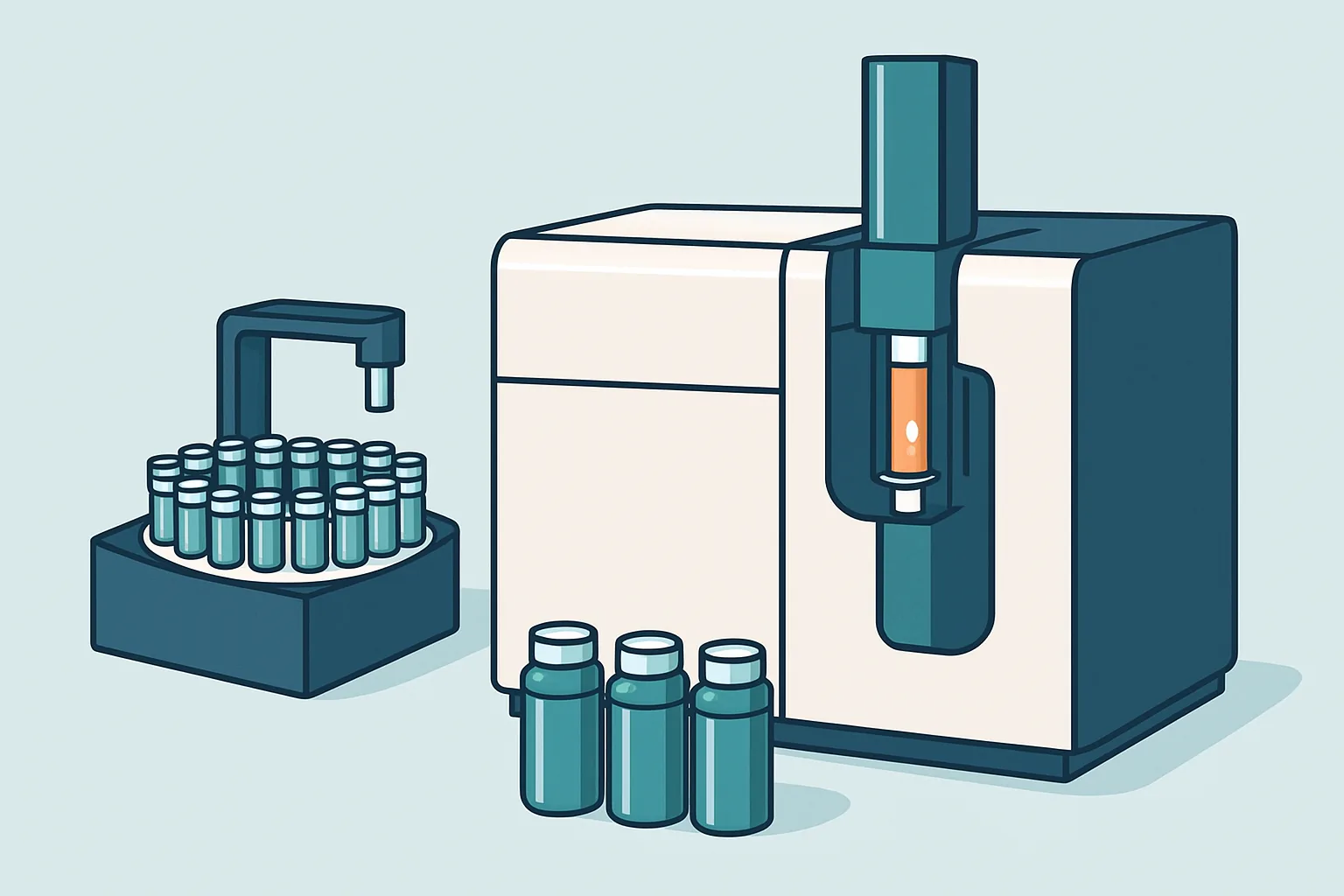
Heavy metals turn up in supplement testing reports with a regularity that surprises people who assume contamination implies negligence. Much of the time it implies neither negligence nor adulteration. It implies that the raw material was grown in soil or dug out of the ground, and that both soil and rock contain metals.
The interesting questions are therefore not whether a metal is present, since a sensitive enough instrument will find traces of most elements in most botanical material, but how much is present, how that compares against a limit that means something, and how much of it a person actually takes in a day. A report saying lead was detected and a report saying lead exceeded a limit are different documents, and they are routinely conflated.
This piece covers why certain supplement categories carry more metal than others, how the instrument that finds them works, and how to read the resulting numbers without either dismissing them or overreacting to them.
Key takeaways
- Botanical supplements concentrate metals because plants take up soil elements, and mineral supplements carry them because they originate in geological deposits.
- ICP-MS reaches parts-per-billion sensitivity by turning the sample into ions in a plasma hotter than most flames and weighing them.
- Not detected always means below a stated limit, and a report without that limit conveys very little.
- Proposition 65 warning thresholds are far lower than most food safety limits, so a warning is not a statement that a product is unsafe.
- A concentration in the powder becomes meaningful only after multiplying by the serving size actually consumed.
Why Certain Supplements Concentrate Metals
Contamination is not evenly distributed across the supplement aisle, and the pattern follows directly from where the ingredients come from.
Plants absorb elements from soil through their roots, and their uptake systems are not perfectly selective. A transporter evolved to bring in an essential nutrient will often accept a chemically similar toxic element, which is why cadmium enters plants through pathways intended for zinc and manganese. Uptake efficiency varies enormously by species, and some plants are notably efficient accumulators. Leafy material and roots generally carry more than fruits or seeds, because that is where uptake and storage occur.
Concentration then compounds the problem. A botanical extract may require many kilograms of plant material to yield one kilogram of product, and whatever metal was in the plant is largely retained while the water and bulk are removed. An extract can therefore carry several times the metal concentration of the herb it came from, which is why extracts and whole-herb powders from the same plant return quite different results.
Mineral supplements have a different origin story. Calcium, magnesium and trace mineral products derive from mined deposits, from shells, from bone meal or from seaweed, and geological materials contain whatever the deposit contains. Calcium sources of shell or bone origin have historically shown higher lead levels than refined synthetic sources, because lead substitutes readily for calcium in biological mineral structures.
Marine ingredients carry the metals of the marine environment, most notably mercury, though oils are generally lower than the flesh they came from because mercury binds to protein rather than fat. Seaweed products can be high in inorganic arsenic, and clay products taken for digestive purposes are geological material eaten directly.
A final route is processing. Grinding equipment, pigments and storage materials can all add metal, and some traditional preparations have been documented to contain metals added deliberately as part of the formulation.
How ICP-MS Detects Parts Per Billion
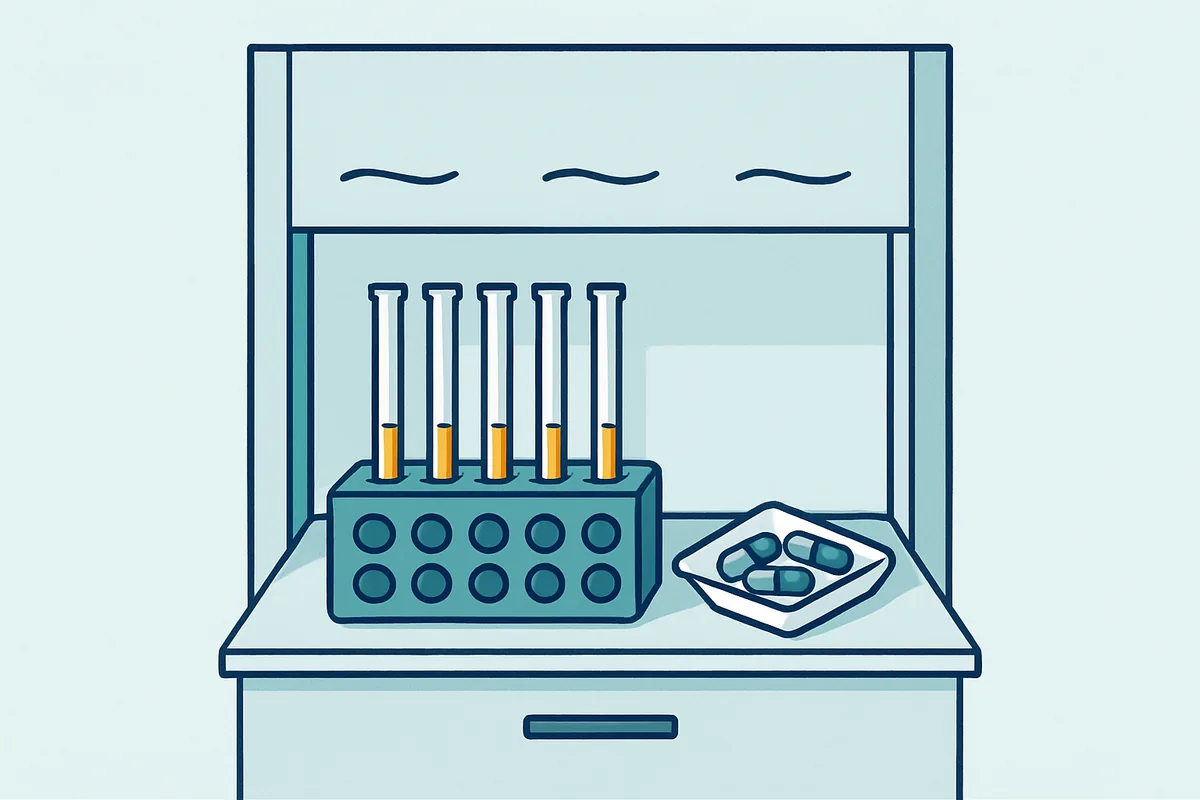
The technique underpinning almost all modern metals testing is inductively coupled plasma mass spectrometry, and its sensitivity comes from an unusually aggressive approach to getting elements into a measurable state.
Preparation comes first, and it is destructive by design. A weighed portion of the supplement is heated with strong acid, usually nitric acid, often in a sealed vessel in a microwave system. The organic matrix breaks down completely, leaving the metals dissolved. Complete digestion matters: undigested material leaves metals trapped where the instrument cannot see them, producing falsely low results.
The clear digest is drawn into a nebuliser that converts it into a fine aerosol, swept into a plasma of argon gas sustained by radio-frequency energy. The plasma runs far above the temperature of any ordinary flame, and at that temperature molecules are torn apart entirely and most elements lose an electron. Whatever compound the metal was originally in is irrelevant by this point; only ionised atoms remain.
Those ions are extracted into a vacuum and passed to a mass analyser, usually a quadrupole, which admits only one mass-to-charge ratio at a time. Counting ions at the mass corresponding to lead gives a signal proportional to lead concentration, calibrated against standards of known concentration.
The sensitivity of this arrangement is the reason not detected requires careful reading. The instrument can count individual ions, so detection limits sit in the parts-per-billion range and below for many elements. At that sensitivity, almost every botanical sample contains measurable amounts of several toxic elements, and a result of zero is essentially unheard of when the method is applied properly.
Interferences are the main technical challenge. Ions formed from the plasma gas, the acid and the sample matrix can share a mass with the analyte, most famously an argon-chlorine combination appearing at the same mass as the main arsenic isotope. Modern instruments address this with a collision or reaction cell before the analyser, which uses a gas to break up or shift interfering species.
Lead, Cadmium, Arsenic and Mercury Sources
Four elements dominate supplement testing, and they behave differently enough to warrant separating.
Lead is the most frequently detected. It is widespread in soil from historical use in fuel, paint and industry, it persists indefinitely, and plants take it up readily. It receives most attention because effects on neurological development in children are documented at low exposures, and health authorities identify no threshold below which no effect occurs.
Cadmium enters soil through phosphate fertilisers, sewage sludge and industrial deposition, and plants including cocoa, sunflower, flax and some leafy species accumulate it efficiently. It builds up in the kidney over decades, so chronic low intake matters more than occasional higher exposures.
Arsenic requires a distinction that many reports omit. Total arsenic includes organic forms found abundantly in seafood that are largely non-toxic and rapidly excreted, alongside inorganic forms that are the actual toxicological concern. A high total arsenic figure in a marine product may reflect harmless organic compounds, so speciation analysis, which separates the forms, is needed for interpretation. Rice-derived ingredients are a notable inorganic arsenic source because the flooded growing conditions favour uptake.
Mercury appears mainly in marine ingredients as methylmercury, which biomagnifies up the food chain, so long-lived predatory fish carry the most and products from small, short-lived fish carry less.
| Element | Main supplement sources | Key toxicological concern | Testing note |
|---|---|---|---|
| Lead | Botanicals, mineral and shell-derived calcium | Neurodevelopmental effects, no clear threshold | Most commonly detected; drives most warnings |
| Cadmium | Cocoa, seeds, leafy botanicals, phosphate-fertilised crops | Kidney accumulation over decades | Long biological half-life makes chronic intake key |
| Arsenic | Rice ingredients, seaweed, some botanicals | Inorganic forms only | Total figure misleads without speciation |
| Mercury | Fish oils, fish protein, some traditional preparations | Neurological effects of methylmercury | Oils generally lower than fish flesh |
Detection Limits and the Meaning of Not Detected
No laboratory can report an absolute absence. Every method has a concentration below which it cannot reliably distinguish a real signal from background noise, and results below that point are reported as not detected.
Two related figures define this. The limit of detection is the lowest concentration at which the instrument can state with reasonable confidence that something is present. The limit of quantification is higher, marking the lowest concentration reportable as a number with acceptable precision. Between them lies a zone where the laboratory can say a metal is there but not reliably say how much.
Because both figures are properties of the method rather than of the product, not detected means nothing without them. Not detected at a limit near the top of the relevant regulatory threshold is close to worthless. Not detected at a limit far below any threshold of concern is genuinely informative. A report omitting the limits is either careless or designed to be read as more reassuring than it is.
Detection limits also depend on the sample itself. Digestion dilutes the original material, so the limit quoted for the product is back-calculated from the instrument’s limit and the dilution used. Taking a smaller portion, or diluting more heavily to manage matrix effects, raises the effective limit in the product, which is one reason two laboratories can quote different limits for the same element.
Laboratory accreditation matters here. An accredited laboratory has demonstrated its methods, its detection limits and its participation in proficiency schemes where blind samples are analysed and compared against other laboratories. That external check is the difference between a stated limit and a verified one.
Proposition 65 and Threshold Confusion
Californian labelling requirements generate more confusion in supplement discussions than any other regulatory instrument, largely because the warnings are frequently read as safety determinations.
The regulation requires a warning when a product exposes a person to more than a defined daily amount of a listed substance. Crucially, those amounts are set with large safety margins built in and are substantially lower than the intake levels other food safety frameworks treat as acceptable. The regulation is a right-to-know provision about exposure, not a determination that a product is harmful.
Several consequences follow. Products carrying a warning may contain metal levels well within limits considered acceptable elsewhere, and manufacturers sometimes apply warnings defensively across a product range regardless of test results, because an unnecessary warning costs far less than an omitted one. The absence of a warning is likewise not proof of low levels.
The comparison people usually want is against limits derived from intake modelling rather than labelling triggers. Food standards bodies publish maximum levels for certain elements in specific food categories, and pharmacopoeial standards specify limits for elemental impurities expressed as permitted daily exposures. Those are the numbers carrying health-based reasoning, and they are more informative than the presence or absence of a warning label.
Serving Size Arithmetic in Contaminant Claims
A concentration in a powder is not an exposure. The step that connects them is arithmetic, and skipping it is the single most common error in interpreting metals reports, in both directions.
Reports state concentration, typically as micrograms of metal per gram or per kilogram of product. Exposure is that concentration multiplied by the mass of product consumed per day. Two products with identical concentrations produce very different exposures if one is taken as a small capsule and the other as a large scoop of powder.
This explains why bulk powders attract more attention than their concentrations alone suggest. A protein or greens powder taken by the tens of grams daily delivers far more of any contaminant than a capsule weighing a fraction of a gram, even when the capsule’s concentration is higher. It also explains why comparing a concentration directly against a food limit misleads, since food limits assume typical consumption of that food.
The other side of the arithmetic is total dietary exposure. Metals arrive from many sources, and a supplement contributes a share of a total that includes water, staple foods and, for lead, historical accumulation in the body. Whether a supplement’s contribution matters depends on how large it is relative to that total. For most products the contribution is small; for heavily consumed powders and for certain botanical and mineral categories, it can be a meaningful fraction.
Reputable reports show the working: concentration, serving size, resulting exposure per serving, and a comparison against a named reference level. Reports quoting only a concentration, or only a reassuring phrase, leave the reader to do arithmetic they usually cannot complete because the serving mass is not stated.
Reading a Metals Panel on a Product Report
A metals panel is readable in a few minutes if you know what to look for, and the useful questions are mostly about method rather than results.
Start with the sample identity. The report should name the product and, critically, a batch or lot number matching the container in hand. Metal content varies between batches because raw material varies between harvests and suppliers, so a certificate for an old batch says little about the current one.
Next, look at the method and the laboratory. ICP-MS is the expected technique for trace metals; older atomic absorption methods are legitimate but less sensitive. The laboratory should be independent of the manufacturer, accredited to a recognised standard, and named on the document.
Then look for detection and quantification limits alongside each result. Their presence signals a properly constructed report; their absence is the single most common weakness in documents circulated for marketing purposes. Check whether the limits are low relative to the thresholds you care about.
Check which elements were tested. A panel covering only the four common elements is standard, but broader panels exist, and a product from a category with a specific risk should be tested for the relevant element. For any product likely to contain arsenic, check whether speciation was performed or whether only total arsenic is reported.
Finally, check the units and the basis. Results may be expressed per gram, per kilogram or per serving, and confusing these produces thousandfold errors. Confirm whether results are on a dry weight or as-received basis, since dry weight figures appear higher for the same material.
What a clean panel establishes is narrow but real: that a specific batch, tested by a named laboratory using a stated method, contained less than a stated amount of the listed elements. It says nothing about the next batch, about elements not on the list, or about anything other than metals. That is still considerably more than most products offer, and asking for it is the most effective pressure a purchaser can apply.
Frequently asked questions
Does a heavy metals warning label mean a supplement is dangerous?
Not by itself. The warning thresholds used in Californian labelling are set well below levels other regulators consider acceptable, so a warning indicates exposure above a conservative trigger rather than a finding of harm. Manufacturers also apply warnings pre-emptively across product ranges to avoid the risk of omitting one. The informative response is to look for the actual test results for the batch, compare the exposure per serving against a health-based reference level, and consider how much of the product is consumed daily.
Are organic supplements lower in heavy metals?
Generally not, because organic certification governs which inputs may be used during cultivation rather than what the soil already contains. Lead, cadmium and arsenic are present in soil from geological sources and historical contamination, and organic cultivation does nothing to prevent uptake. There is a partial exception for cadmium, since phosphate fertilisers are a cadmium source and their use is restricted in organic systems, but soil legacy usually outweighs that effect. Testing, not certification, is what tells you the metal content.
Should I test my own supplements?
For most people this is not practical or worthwhile, since accredited trace metals analysis costs considerably more than the products being tested and requires a properly digested sample rather than a mailed capsule. A more effective approach is to buy from manufacturers who publish batch-level certificates from independent accredited laboratories, and to check that those certificates list detection limits and match the lot number on the container. Where consumption is unusually high, such as with bulk powders, that documentation is worth insisting on.
Which supplement categories deserve the most scrutiny?
Those combining a plausible contamination route with a large daily intake. Bulk botanical powders, greens blends and protein powders are consumed by the tens of grams, so even modest concentrations accumulate. Mineral supplements derived from shells, bone or clay, and traditional preparations from regions where metals have been used as formulation components, have documented histories of elevated lead. Cocoa-based products warrant attention for cadmium, and rice-derived ingredients for inorganic arsenic. Capsules of concentrated single compounds taken in small daily masses are generally the lowest concern.
Why do two laboratories report different results for the same product?
Several reasons, most of them legitimate. Products are not homogeneous, so two portions from the same container can genuinely differ, particularly for blends of ingredients with different metal contents. Digestion completeness varies between methods, and incomplete digestion under-reports. Different detection limits, different handling of interferences, and different reporting bases such as dry weight versus as-received all shift the figures. Substantial disagreement between accredited laboratories is uncommon; disagreement between an accredited laboratory and an unaccredited one is not.
The framing that makes all of this manageable is to stop asking whether a supplement contains heavy metals and start asking how much reaches you each day, from this product, relative to everything else. Presence is nearly universal at modern detection limits. Exposure is a number, and it can be compared against something.
That shift also changes which products deserve attention. It moves scrutiny away from small capsules with alarming-sounding concentrations and toward the large daily servings of botanical and mineral material that most people never think of as a contaminant source at all.
This is education, not medical advice. Laboratory results only carry meaning alongside your symptoms, history and examination. Talk to a qualified clinician about your own results before changing anything about your care or supplements.